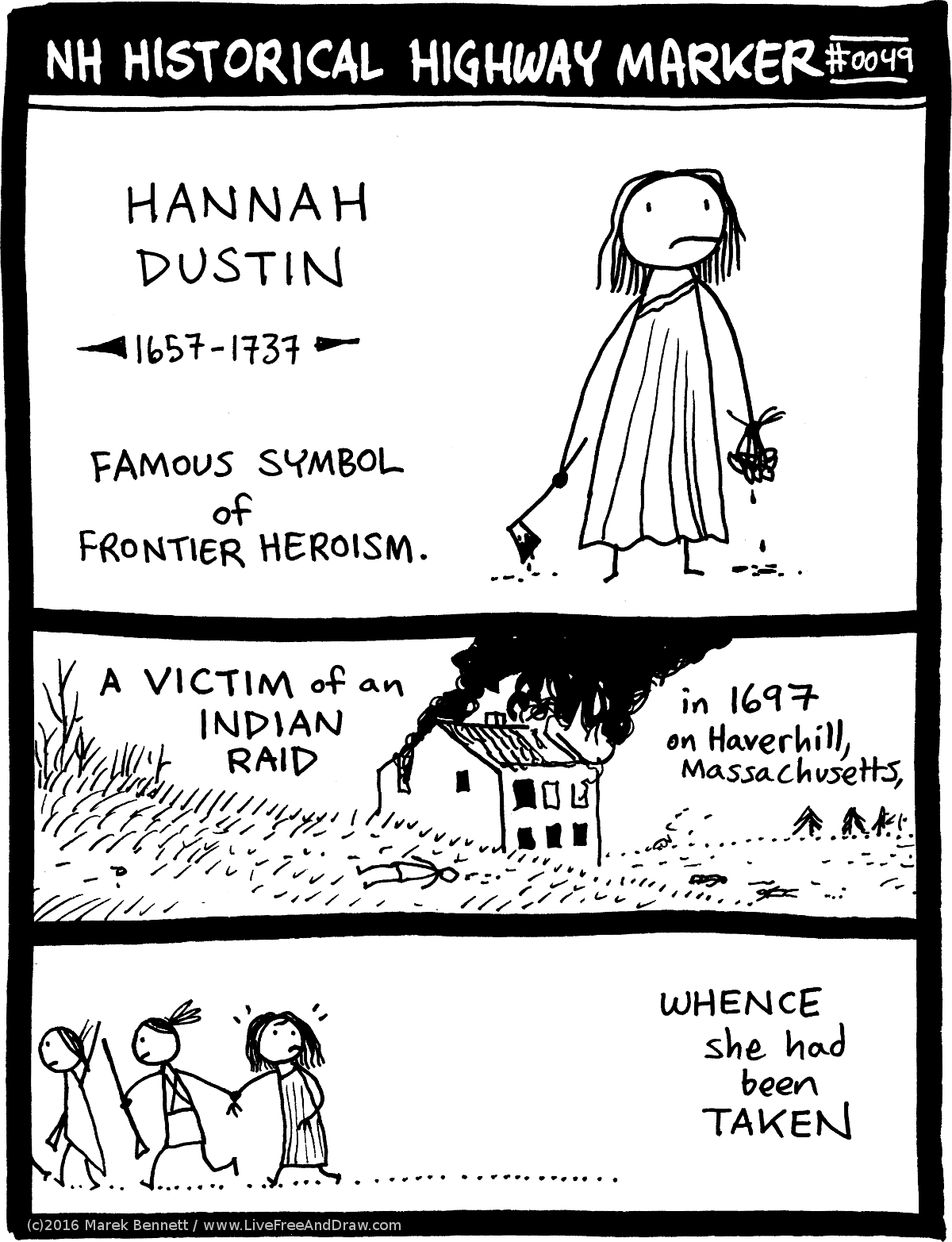
NH Historical Highway Marker #0049 raises disturbing questions about the role of violence, trauma, and racial identity in New England history:


<< BACK: Marker in the snow | NEXT: Context for the first line… >>
The text of this comic comes directly from the marker itself, found at the Boscawen park ‘n’ ride (map here):

This is actually an incomplete (even misleading) version of the events! Of course, the next step is to annotate this partial telling with details found in some contemporary accounts and more recent commentary, namely:
- Cotton Mather’s account (taken in 1697) >>
- Sewall’s diary (taken 1697) = see [310] here >>
- Denise Ortakales’ insightful article, “Following in Hannah Duston’s Footsteps: Reexamining the Evidence” >>
- Robert D. Arner’s analysis >>
- Native perspectives quoted here >>
- RoadsideAmerica.com features a description of monument site here >>
- …


She was my 9th Great Grandmother. The comic didn’t put the part where they brained her new born baby in front of her and that they were being held until they were going to be marched up to Canada to run the gauntlet. However, me telling this does not mean I do not understand the role that my ancestors played from colonialism and the genoicide of innocent natives that whites caused. I am simply saying the role of racism does not apply with her. She didn’t kill them because they were natives. She killed them because she was going to be made to run the gauntlet and they brained her newborn baby in front of her. A mother’s wrath knows no boundary. By the way, I believe that natives had the right to the land that Colonials stole from them. Whites were the savages. Whites were the cancer. What can you do though about history? Teach it so it never happens again.
J ~ Agreed, this comic represents ONLY the text posted on the Historical Highway Marker sign. It’s part of a (projected) longer series that examines different parts of the story & its historiography — definitely including deeper looks into the experiences of the Dustin family & native peoples of the time. Alas, it’s on my back burner at the moment, but thanks for your comments… ~ M
She was my 12th great-grandmother and I too think our treatment of indigenous peoples was sickening, but I also have to caution that there’s a huge difference between who we are as individuals and the actions of our government. Our government’s treatment of indigenous peoples is atrocious even today. And yet, it’s incredibly unfair to fault an individual for the actions of their government. By that measure, Marek is as responsible for the actions of D. Trump as Hannah Duston was for the treatment of indigenous peoples under the Colonial government… perhaps even more so since the United States is a “democracy” and because we’re generally more informed today than Hannah was then. Many colonists came to America to escape their own oppressive government of the time, but they weren’t exactly privileged. The American frontier was harsh and conflict with the indigenous peoples was frightening. Again…, we have the benefit of being better informed and living comfortably today. Whatever the motivations of her captors, Hannah was a victim here and she did what she had to do to secure her escape. She didn’t ask to become a folk hero. She didn’t ask to have her child’s head dashed against a tree. She didn’t ask to be captured. The comic makes her appear malicious and bloodthirsty, presumably in an attempt to right a perceived wrong, but without fair treatment of all parties, it’s just propaganda.
J ~ All good points ~ (Drawing) history (comics) is indeed fraught with such decisions & framings. This comic was my attempt to interpret the text of the historical marker, informed in part by the research in Jay Atkinson’s book Massacre on the Merrimack: Hannah Duston’s Captivity and Revenge in Colonial America as well as Lisa Brooks’ Our Beloved Kin. It was meant to be paired w/ more pages interpreting OTHER historical treatments of the story. Looking back on it from a few years later, I definitely would draw it differently — For example, you’re right to draw our attention to the historical marker’s omissions, but alas that’s the nature of presenting history on tiny signs of 56 words.
While researching & reaching this & other stories, I’ve developed similar projects that will inform any 2nd take — For example, tying the history of enslavement in Massachusetts-NH into the events & lands & families & communities in conflict here — See my BLACK REVOLUTIONARIES series.
Thanks for bringing my attention back to this long-awaiting story here — I appreciate the reminder that we need to represent & share as many sides of these stories as possible.
Sometimes it just takes a few years!