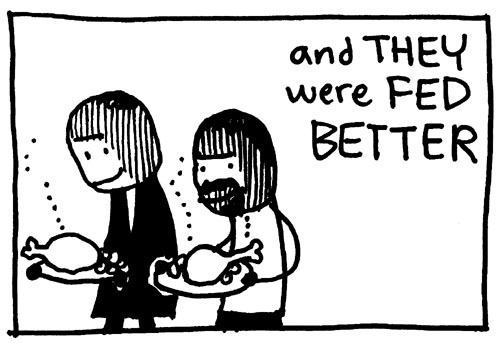
1862: Colby vents his jealousy of the treatment received by former slaves ...
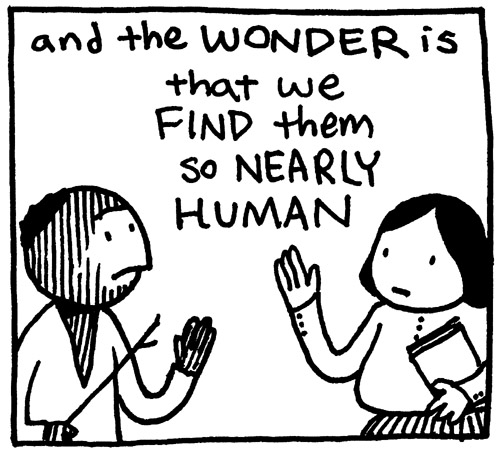
Hawks 20: Their Environment
1862: Dr. Esther confronts head-on the situation of the South Carolina Freedmen:
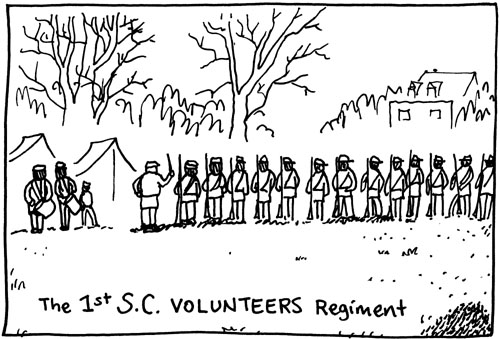
Hawks 19: The Lowest Type
1862: Dr. Esther sets out to write about freedmen volunteering to fight for the union, but once again encounters her own racial prejudices ...

Hawks 18: Morality
1862: Dr. Esther's observations of the "peculiar characteristics of the negro":
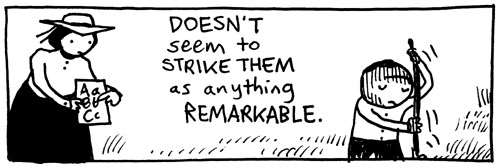
Hawks 17: Merely a Subterfuge
1862: Dr. Esther suspects the former slaves are trying to trick her ...

Hawks 13: From a Military Point of View
1862: Dr. Hawks lays out some of the military realities of her surroundings ...
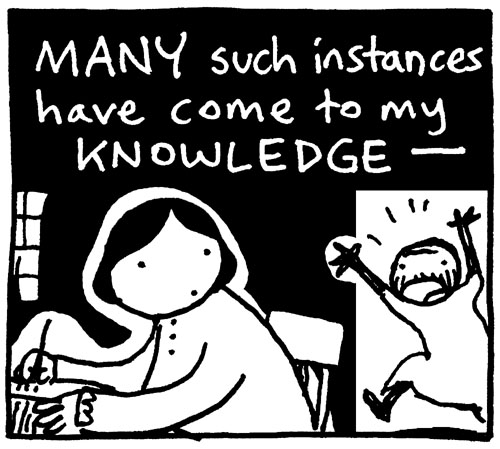
Hawks 12: No One Is Punished
1862: General Saxton confronts the ruthless tide of violence against former slaves ...
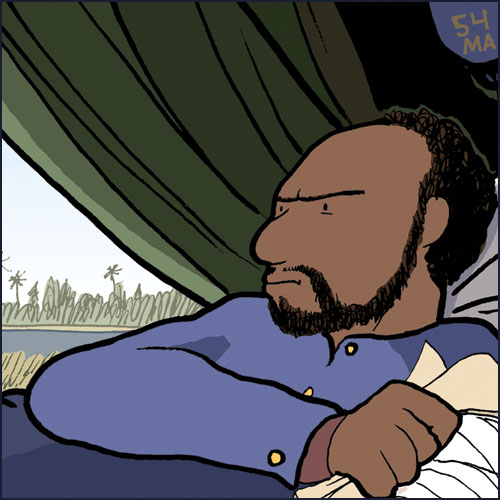
Hawks: Nursing the 54th Massachusetts (poster)
1863: Dr. Esther Hill Hawks confronts many of her own racial preconceptions when she finds herself managing the camp hospital that receives over 500 wounded men of the 54th MA following their assault on Fort Wagner...

Hawks 23: 300 Pupils
1862: Dr. Esther loses her voice teaching 300 freedmen students at a time ...

Hawks 22: Eager to Go to School
1862: Roman poets among the ruins ...

Hawks 21: Family of Servants
1862: Dr. Esther has some help at her new home in South Carolina ...

Hawks 4: Unfit for Ocean Travel
1862: To South Carolina, by leaky boat full of diseased soldiers ...

James Willis Patterson
Drawn from a portrait in the reading room at Tucker Free Library (Henniker, NH): Patterson taught school in New Hampshire, and later served as a Republican member of Congress during the Civil War, where he supported the establishment of Freedmen's Schools in the South. [Also see James W. Patterson on Wikipedia]
 Live Free and Draw 📖